
Safe & Effective Surgical Care
Stillwater Equine Veterinary Clinic’s surgical team, led by our board-certified surgeon, provides expertise and experience in a full range of elective and emergency procedures.
Our surgeon is involved in the management of each case from diagnosis through rehabilitation to assist patients in returning to their previous level of activity.
Our combination of dedicated staff and years of experience allow us to offer both elective and emergency surgical services.
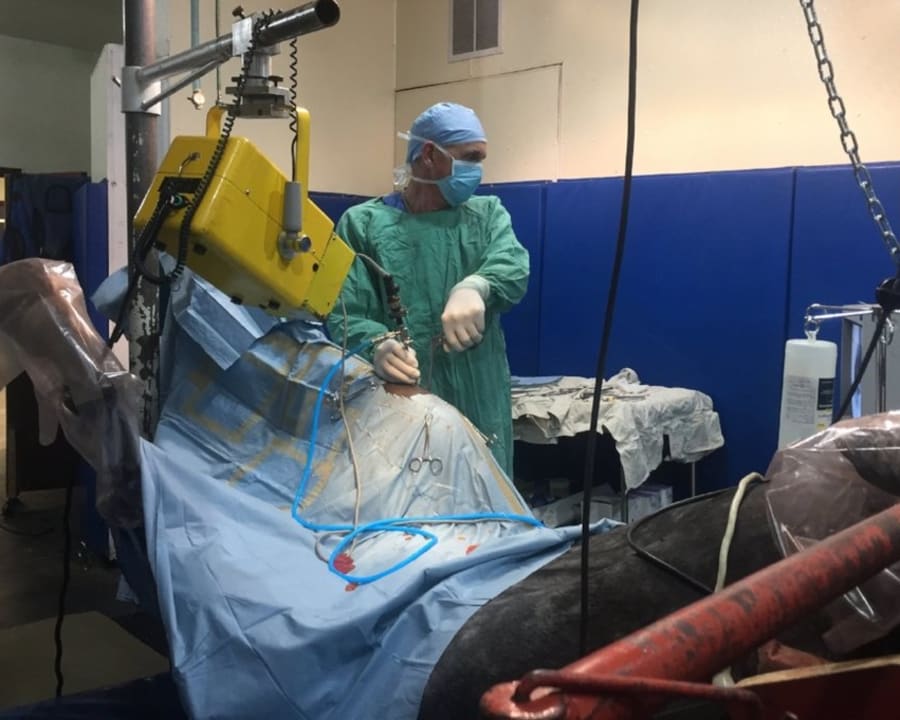
What to Expect From Equine Surgery
We always keep clients fully informed about why a surgical procedure is recommended, the length of recovery, and any post-operative care their horse will need.
Surgical Procedures at Stillwater Equine Veterinary Clinic
Elective surgeries performed at Stillwater Equine Veterinary Clinics are diverse in their nature and each case is unique in its needs. Some of the surgical cases we see include:
- Minimally Invasive Arthroscopy/Tenoscopy
This type of surgery allows our surgeon to evaluate and treat a variety of conditions within the joints, tendon sheaths, and bursae of the horse. The surgeries are performed through small incisions that heal quickly resulting in a faster return to health and function for your animal.
- Colic Abdominal Surgery
Colic surgery is one of the most common soft tissue surgeries that equine surgeons perform. Our veterinarians can assess your horse's condition and recommend surgical solutions if it is in the best interest of your horse.
Our surgeon is available part-time on a case-by-case basis.
- Abdominal Hernia Repair
Horses can be born with a hernia or even develop one during their life due to trauma. Our veterinarians can determine if surgical correction is necessary.
- Dental & Sinus Surgery
Typically done standing, these procedures are utilized when there are diseases of the sinuses or in cases where oral extraction of problem teeth were unsuccessful.
- Orthopedic Surgery
Orthopedic surgery can include fusion of joints through ankylosis or arthrodesis, screw implants into bone cysts, growth plate modification in foals, and even fracture repair in some cases. These surgeries in the horse requires precise technique and careful planning from our surgical team.
- General Soft Tissue
Soft tissue surgery covers a wide range of surgical procedures including surgical repair of trauma after foaling to the reproductive tract, urogenital surgery, muscle biopsy, and mass removal among many others.
- Neonatal Surgery
Some foals are born with or develop problems that require surgical intervention, from a septic umbilicus to contracted tendons.
- Ophthalmic
Our surgical staff performs uncomplicated ophthalmic procedures like transpalpebral enucleation, we also partner with board certified ophthalmologists to offer a wide range of surgical procedures for your horse.
- Upper Airway
The upper airway of the performance horse is a finely tuned structure that relies heavily on the balance of many structures working together. When one of these malfunctions, our surgical team is able to offer a variety of surgical procedures such as epiglottic entrapment release, tie-backs, tie-forwards, partial arytenoidectomies, among many others.
- Minimally Invasive Laparoscopy
Some abdominal procedures are able to be performed on the standing horse through laparoscopy. These include ovariectomies, nephrosplenic space ablations, thoracoscopy, and diagnostic evaluations.
- Laser Surgery
Our state-of-the-art diode laser is the latest in surgical techniques utilized in tumor excision and reduction, particularly with regards to peSome abdominal procedures are able to be performed on the standing horse through laparoscopy. These include ovariectomies, nephrosplenic space ablations, thoracoscopy, and diagnostic evaluations.rianal melanomas and urogenital tumors. Additionally, the diode laser is utilized for ventriculocordectomies to improve upper airway function.
- Neurectomy
A neurectomy is a procedure where the surgeon removes part of a nerve. This procedure is most commonly performed for chronic conditions of the foot. Removing part of the nerve can alleviate pain for anywhere from 6 months to many years.
- Castration
Including mature stallion & cryptorchid surgeries
Standing vs. Traditional Surgery
Most large animal surgeries are performed on standing, awake patients, and are typically to repair traumatic injuries such as lacerations. Other common procedures performed standing are castration, reproductive surgery, and minor hoof and lower leg procedures.
Recovery from general anesthesia is the single largest risk for horses after surgery, and standing surgery avoids most of those risks. Also, some surgical procedures are easier to perform on a standing patient. Performing a standing procedure whenever possible is in the patient's best interest.
The Surgery Process
We understand the devotion you have to your horse's safety and well-being. Please be assured that we recommend surgery only when it is in your horse's best interests.
Our team has extensive experience in equine surgery, including managing and treating complications. You can trust that we will do everything we can to make the process as safe and comfortable as possible for your horse.
What To Expect When Your Horse Has Surgery
For most procedures, we will coordinate to have you drop your horse off the day prior to their scheduled surgery. If additional diagnostics are required, they may be scheduled for an appointment prior to surgery or they may be performed when they arrive. Some procedures require a modified diet prior to surgery, but the majority of horses are able to eat normally right up to the morning of surgery. Our exceptional staff will make sure that we have all the instructions for care for your horse to ensure a comfortable and peaceful stay in the hospital.
Each general anesthesia surgical patient has pre-operative blood work performed to check for any abnormalities that may increase risk of an anesthetic procedure. If all is normal, your horse will have an intravenous (IV) catheter placed in its jugular vein. This gives us access to administer medication, anesthetic drugs, and fluids if needed without having to repeatedly pass a needle into their vein. All horses receive preoperative antimicrobials and anti-inflammatories to protect them during the surgical process.
During surgery, your horse is monitored by our anesthesia team that has extensive experience keeping patients safe during surgery. We use invasive and non-invasive blood pressure, capnography, pulse oximetry and ECG monitoring to reduce risks when your horse is under anesthesia. General anesthesia is a risk for large animals, but our team and facilities are well prepared to minimize this risk as much as possible.
Postoperatively, our surgeon will call you as soon as your horse is on its feet and headed back to their stall with an update on surgery and what the plan is for recovery. Our caring staff, including veterinary interns, licensed technicians, and barn attendants, treat each patient with compassion and respect, as if they were our own horses.We provide the highest level of care and attention to your horse from monitoring vital signs daily, to bandage changes, incision monitoring, and medication administration. You will get daily phone updates from our surgeon while your horse is hospitalized. We understand that high-quality perioperative care is essential to a successful outcome and strive to provide the best possible care for every horse that enters our facility.
When our surgeon feels that your horse is stable enough to be discharged, you will be sent home with a full discharge that outlines the basics of what was done in hospital as well as thorough care and monitoring instructions while at home. If, at any point, questions arise, we welcome you to call our front desk so we can ensure your horse is receiving the best care possible.
Equine Emergencies
Emergencies in the equine patient can be extremely stressful situations for both horse and owner. At Stillwater Equine Veterinary Clinics, we pride ourselves on being resources for you and your horse.
Depending on the availability of our surgical staff, we perform emergency surgeries such as: Colic surgery, Laceration Repair, Septic Joint Lavage, and C-Sections.
If your horse is experiencing a surgical emergency or your veterinarian believes they need to have an emergency surgical intervention, please call our front desk line/emergency line at (651) 770-6167 at all points in the day to check on the availability of our surgical team. If we are not able to offer surgery on a particular day, we will facilitate a referral to the University of Minnesota Large Animal Hospital.
New Patients Welcome
Stillwater Equine Veterinary Clinic is accepting new patients! Whether you bring your horse to our Stillwater hospital or we are providing mobile care, trust that we have the tools and skills to meet your horse's every need.
Contact
Hours
-
Click to View
- Monday:08:00 am - 04:30 pm
- Tuesday:08:00 am - 04:30 pm
- Wednesday:08:00 am - 04:30 pm
- Thursday:08:00 am - 04:30 pm
- Friday:08:00 am - 04:30 pm
- Saturday:08:00 am - 12:00 pm
- Sunday:Closed